

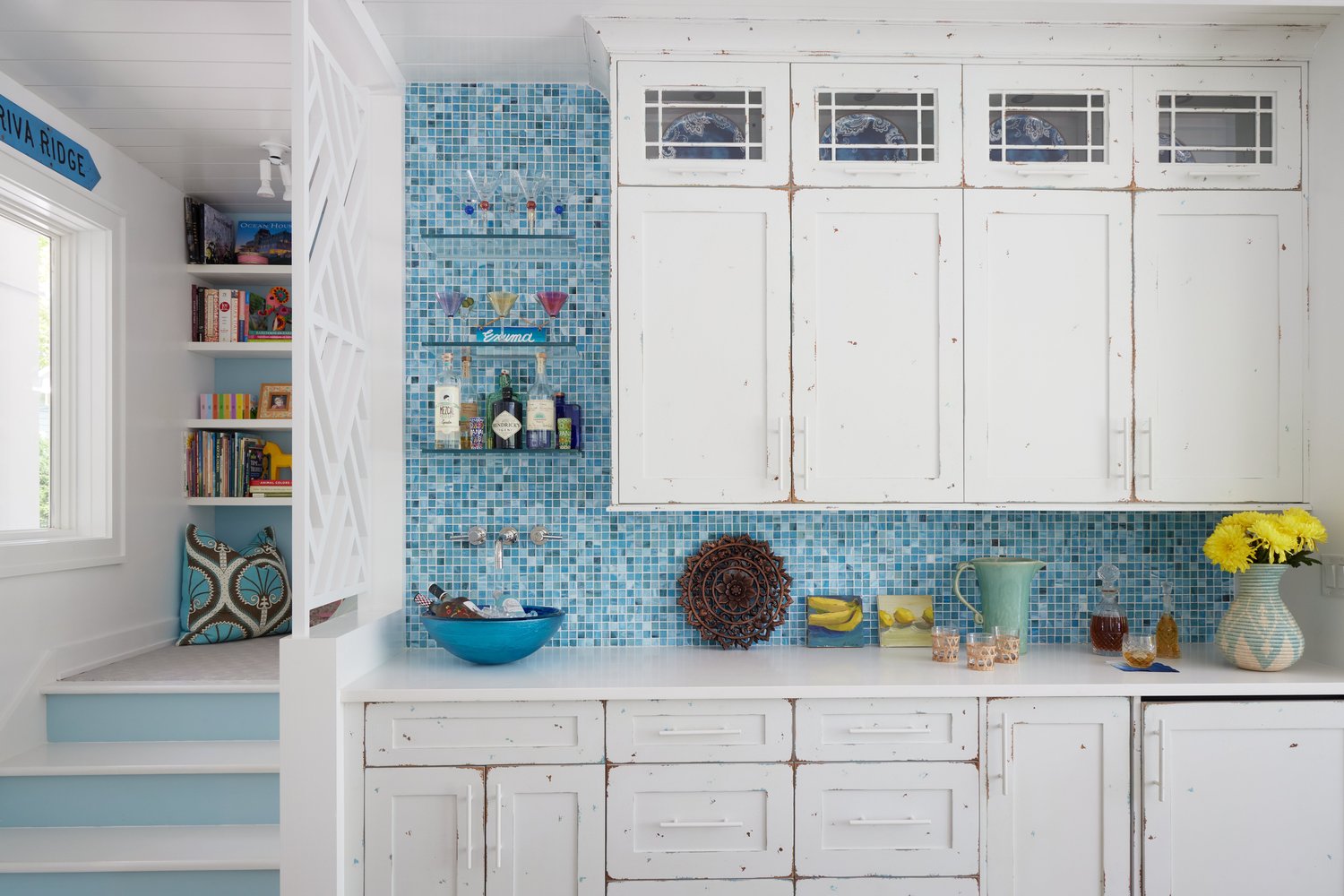
Design inspired by the shoreline has long been associated with breezy whites and beachy pastels—but what if we turned that tradition on its head?
Modern seaside interiors are embracing boldness: richer colors, statement lighting, and tactile finishes that lean into contrast and complexity. These aren’t just beach houses; they’re expressions of place, mood, and identity.
At Kellie Burke Interiors, we specialize in curating spaces that feel both rooted and unexpected. Let’s explore how to give your home by the water an edge—one layer at a time.
The Bold New Look: Color That Speaks
Out with the pale blue. In with deep indigos, ochres, and moody greens.
Instead of relying on the traditional beachy palette, we use color as a tool to build drama and dimension. The result? Interiors that evoke the sea’s mystery rather than just its surface.
Tips for Using Bold Color:
- Ground airy spaces with deep navy or forest green.
- Introduce unexpected hues like aubergine or saffron to balance cool tones.
- Use textured paint or wallpaper to add even more depth.
We often begin with a bold anchor color and build out with accents that echo the tone without becoming predictable. For example, a saturated jade green velvet sofa might be balanced with neutral linen drapes and a carved teak coffee table—rich and layered, never loud. The contrast makes the space feel alive.
When you shift your color approach, you shift the entire mood.
Lighting as Art: Sculptural and Surprising
Good lighting does more than brighten a room. It sets the tone.
Think blown-glass pendants, antique brass sconces, or oversized lanterns that command attention. Lighting in today’s refined coastal-inspired interiors is all about form and function—a way to inject personality into a space.
Try This:
- Hang a dramatic chandelier over a rustic dining table.
- Install sconces with a patina finish to warm up cool-toned rooms.
- Use layered lighting (ambient, task, and accent) to create intimacy.
A sculptural fixture can also serve as a design bridge—connecting traditional and contemporary elements, or balancing heavy textures with visual airiness. In one of our shoreline projects, a raw wood ceiling is softened with suspended brass pendants in organic forms—adding elegance without erasing the architecture.
Lighting isn’t an afterthought. It’s a design statement.
Layers of Texture: What You See and What You Feel
Texture is what makes a room feel lived in. It tells a tactile story.
Homes near the water should embrace contrast—rough with smooth, matte with gloss, old with new. By layering textures, you create a sensory richness that a monochromatic room simply can’t match.
Ideas to Layer Textures:
- Pair linen upholstery with lacquered side tables.
- Add natural elements like driftwood, rattan, or woven seagrass.
- Mix contemporary pieces with vintage finds to enhance the story.
It’s not just about mixing materials—it’s about mixing moods. A velvet armchair next to a rope-wrapped console tells a very different story than a room where every piece is slick and new. Texture invites people to touch, to linger, to connect.
In one signature project, we placed a reclaimed European oak dining table against minimalist, high-gloss cabinetry. The interplay was intentional—inviting conversation not only between people but between eras, aesthetics, and sensations.
Collected, Not Themed: Living with Intention
Forget matching sets. Great design is curated, not coordinated.
We believe every piece should have a story. That’s why we blend eras, styles, and sources to create rooms that evolve over time.
The goal? A layered environment that feels effortless, even if it was anything but.
How to Build a Collected Look:
- Combine antique and modern elements.
- Shop local artisans for meaningful, handmade details.
- Leave space for growth—let your interiors evolve with you.
Collected interiors don’t feel like they were assembled in a weekend. They feel like they’ve been built over a lifetime. A contemporary art piece may hang above a hand-carved console found on a spontaneous trip abroad. A ceramic bowl picked up at a local market becomes the centerpiece that holds court on a polished travertine table.
Design inspired by the coast doesn’t have to mean cliché. It can mean character.
Organic Meets Glamour: Balance Is Everything
Luxury doesn’t always mean shine. And natural doesn’t always mean rustic.
The most compelling rooms balance elegance with earthiness. That might mean mixing crystal with jute, marble with linen, or lacquer with raw wood.
Think About:
- Pairing a sleek metallic mirror with weathered plaster walls.
- Laying a faded Persian rug beneath contemporary Lucite chairs.
- Using organic shapes in high-gloss finishes for a dynamic blend.
It’s this tension—the pull between polish and patina—that gives a room its soul.
We love the challenge of reconciling opposites. Think gilded mirrors in rooms with hand-troweled stucco and layered glass-beaded chandeliers above driftwood consoles. Each combination tells its own story.
For homes in Palm Beach, the key is striking the right contrast—a little glamour, a little grit. It’s what gives a home both edge and ease.