

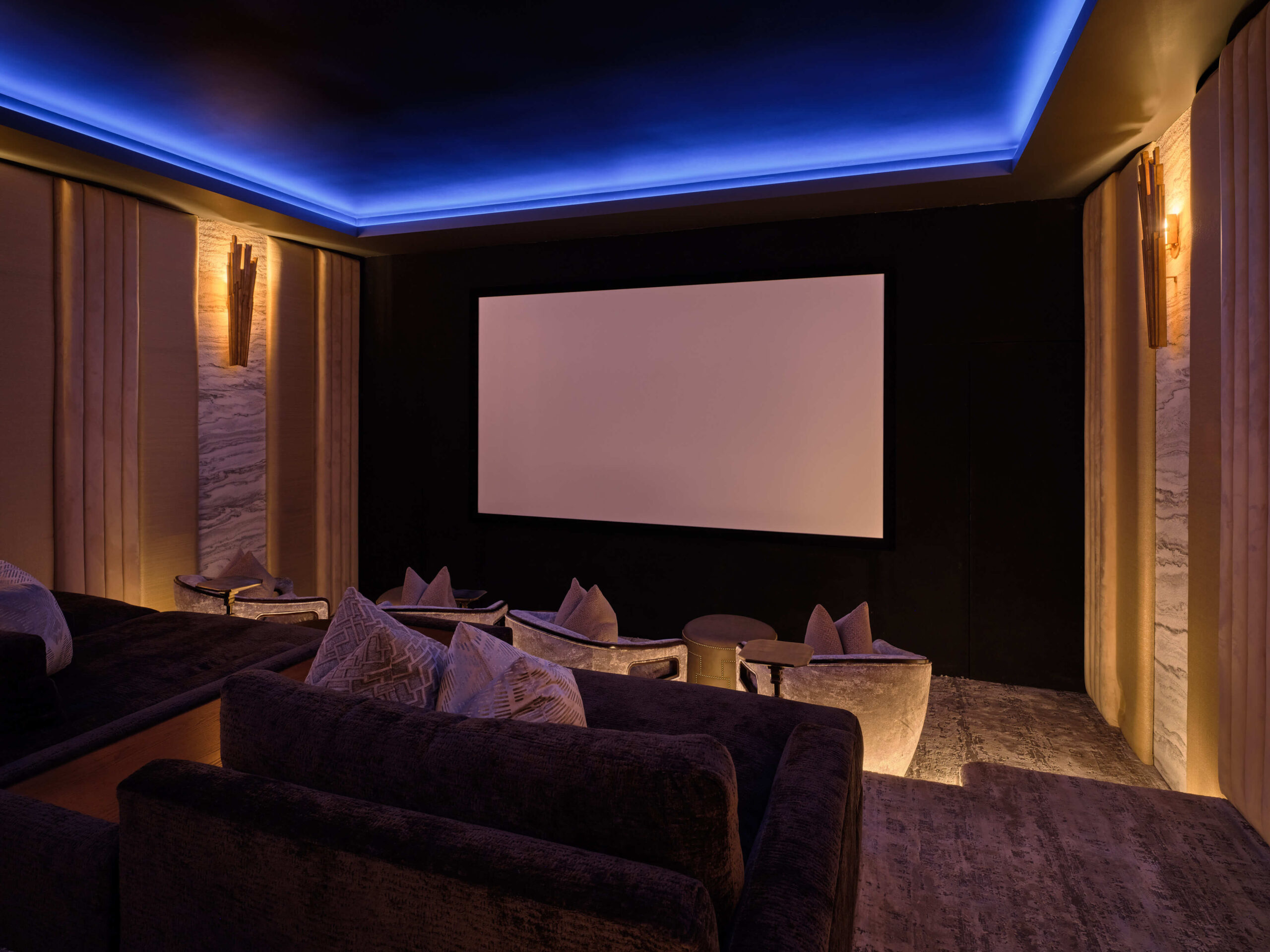
A home can anticipate your needs without looking like it is filled with technology. The most successful smart homes make lighting, climate control, security, entertainment, and other conveniences readily available while allowing the interior itself to hold your attention.
That expectation is increasingly shaping Palm Beach interiors, as homeowners look for spaces that support a more connected way of living. The goal is not to hide every sign of modern life, but to decide where technology belongs visually and where it should quietly recede.
Start With the Experience You Want From the Room
Before choosing devices, consider what you actually want the room to do for you. A living area may need lighting scenes that transition from daytime to entertaining, while a bedroom may benefit more from automated shades, temperature control, and simplified bedside controls.
This gives home designers a practical framework for integrating technology into the overall plan rather than finding places for individual devices afterward. It also helps prevent adding smart features simply because they are available when they may have little value for the way you live.
Plan Smart Technology Alongside the Interior
Technology is easiest to integrate gracefully when it is considered early. Wall controls, speakers, charging locations, motorized window treatments, televisions, and sensors can all affect electrical plans, cabinetry, millwork, and furniture placement.
During a renovation or new build, early coordination also creates more opportunities for concealed wiring and purpose-built locations for equipment. Even when working within an existing home, approaching technology as part of the design plan can make additions feel far more intentional.
Be Selective About What Remains Visible
Not every device needs to disappear. The question is whether a visible piece of technology contributes to the room or interrupts it.
A sleek control panel may sit naturally on a clean wall, while routers, hubs, cords, and other supporting equipment are generally better accommodated elsewhere. Custom cabinetry can provide discreet locations for certain components, while careful outlet placement can eliminate the extension cords and exposed chargers that quickly create visual clutter.
This distinction is particularly valuable in luxury interior design, where the smallest functional details can affect the way a finished room reads.
Treat Controls as Part of the Material Palette
Switches, keypads, outlets, and control panels may be small, but they appear repeatedly throughout a home. Standard selections can stand out against specialty wallcoverings, stone, custom millwork, or richly painted walls.
Instead, their finish and placement can be considered alongside the room’s other hardware. A control that coordinates with nearby metalwork or sits neatly within a millwork elevation feels considered rather than added as an afterthought.
For homeowners interested in modern interior design, this level of detail can be particularly effective in maintaining the clean visual lines associated with contemporary spaces.
Use Lighting Automation to Support the Design
Smart lighting offers more than the ability to turn fixtures on and off remotely. Well-planned systems can create scenes that use different combinations of decorative fixtures, architectural lighting, and lamps depending on the time of day or activity.
That matters because a beautifully designed room rarely looks its best under one uniform level of light. Preset scenes can make the intended layers of lighting easier to use every day, allowing artwork, finishes, and architectural details to appear as they were designed to be seen.
Consider Technology Through a Long-Term Lens
A built-in feature may remain in place far longer than the device or platform controlling it. Wherever possible, the permanent design of the home should allow components to be accessed, serviced, or replaced without requiring major cosmetic changes.
That same long-term thinking can complement sustainable interior design. Creating adaptable infrastructure can help a home accommodate changing technology rather than requiring unnecessary alterations to cabinetry, walls, or finishes each time a system evolves.
Frequently Asked Questions
How can smart technology be considered when designing for outdoor living?
Technology can be built into elements already serving the outdoor design, such as covered structures, landscaping, and lighting plans. This gives screens, speakers, controls, and other features designated places rather than requiring them to be added wherever space is available later.
Can smart home technology be added to an older or more traditional home?
Yes. Smart features are not limited to contemporary architecture or new construction. The appropriate approach depends on the existing electrical infrastructure, architectural details, and extent of the renovation, but technology can be incorporated without changing the traditional character of the interior.
What role does smart home integration play when designing for accessibility?
It gives designers another way to reduce the physical demands of using different parts of the home. When incorporated thoughtfully, automated or remotely controlled features can complement choices made throughout the interior to make everyday spaces easier and more comfortable to use.
A Smarter Home, Thoughtfully Designed
There is no single aesthetic that comes with a smart home. Technology can be part of a richly layered, highly personal interior just as naturally as it can be part of a sleek contemporary one, leaving plenty of room to create a home that reflects your taste rather than the technology within it.
For homeowners across South Florida, Kellie Burke Interiors can bring that same level of consideration to every part of an interior. Bring your ideas to our team and let’s create a home that works beautifully behind the scenes and looks entirely your own.