

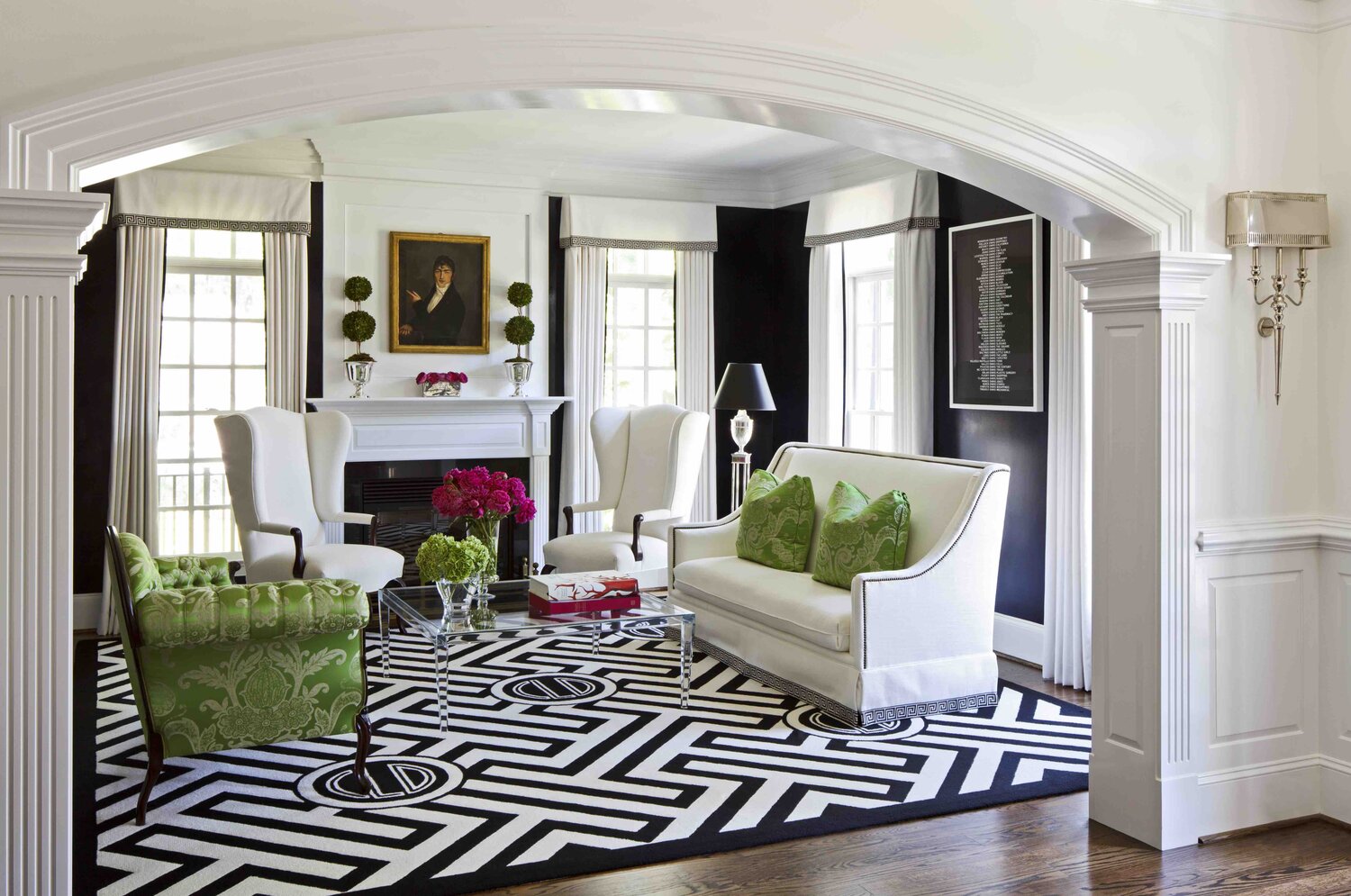
A beautiful sofa can be completely wrong for a room without there being anything wrong with the sofa itself. The problem may simply be scale.
In thoughtfully designed Palm Beach interiors, dimensions matter far beyond whether a piece physically fits. Furniture, lighting, artwork, rugs, and architectural details all occupy a certain amount of visual territory. High-end design considers those relationships together, creating rooms where every element has enough presence without competing with its surroundings.
What Does Scale Mean in Interior Design?
Scale describes the size of an object in relation to the space around it. Proportion is closely related, but refers to how the dimensions of different elements relate to one another.
That distinction becomes important when furnishing a room. A sofa might fit neatly along a 14-foot wall, but that does not automatically mean its height, depth, or visual weight makes sense beneath tall ceilings or beside substantial architectural features.
Experienced home designers therefore look beyond basic measurements. Scale is interpreted within the complete volume of the room.
Why Scale Becomes Especially Important in Luxury Homes
Generous rooms create freedom, but they also create opportunities for furniture to look unexpectedly small. A delicate chandelier can disappear into a two-story space, while undersized artwork may leave an expansive wall looking unresolved.
The reverse can happen in more intimate rooms. Large furnishings or too many visually substantial pieces can consume the available volume and make even a beautifully finished room feel constrained.
This is particularly relevant throughout South Florida, where homes can range from expansive Palm Beach estates and waterfront residences to more compact condominiums. Effective luxury interior design responds to the architecture that is actually present rather than relying on a standard formula.
Physical Size Is Only Half the Equation
Two chairs with identical dimensions can have entirely different effects on a room. One might have slim legs, an open frame, and a pale textile, while another has a solid base, rolled arms, and a deeply saturated fabric.
Although their measurements match, their visual weight does not. Color, pattern, material, silhouette, and construction can all influence how substantial an object appears.
That is why scale cannot be solved with a tape measure alone. A successful room accounts for both the space an object physically occupies and the amount of attention it commands.
Scale Establishes a Room’s Visual Hierarchy
Not everything in an interior should carry equal weight. Some pieces are meant to establish the room, while others support them.
A dramatic work of art, sculptural light fixture, or commanding piece of furniture can become an intentional focal point when the surrounding elements allow it to hold that role. If every object is equally large, bold, or visually demanding, however, the eye has nowhere to settle.
Scale gives designers a way to create hierarchy without stripping a room of personality. The goal is not uniformity. It is deciding what deserves emphasis and giving the rest of the composition enough variation to support it.
Living Rooms Reveal Scale Problems Quickly
Living rooms bring numerous large elements into direct conversation, making proportional mistakes particularly noticeable. The sofa, chairs, cocktail table, rug, lighting, artwork, and architectural features all have to make sense together.
Professional living room designers often begin with the major anchoring pieces and build outward. A substantial sofa may call for a larger cocktail table rather than several undersized accents. A broad seating arrangement may need an equally generous rug to visually contain it.
Scale also affects function. Furniture dimensions and placement influence circulation, conversation, and how comfortably the room can actually be used, not merely how polished it appears.
Custom Design Creates Opportunities to Get Scale Exactly Right
Retail dimensions are predetermined. The architecture of a home is not.
Custom furnishings, built-ins, window treatments, and other made-to-measure elements allow designers to respond directly to unusual ceiling heights, long walls, architectural niches, or rooms with dimensions that standard pieces do not adequately address.
This is one reason bespoke elements can have such an impact in high-end interiors. Customization is not solely about owning something unique. It can solve dimensional problems that an off-the-shelf piece simply was not created to solve.
Kellie Burke Interiors incorporates custom furnishing and lighting layouts into our design services, allowing these decisions to be considered as part of the larger room rather than in isolation.
Frequently Asked Questions
How should decorative objects be scaled within a room?
Decorative objects should relate to both the surface they occupy and the larger furnishings around them. A small accessory can easily get lost on a substantial console or coffee table, while several pieces with varied heights and dimensions can create a more intentional composition.
What determines the right scale for built-in features?
The proportions of the wall, ceiling height, surrounding architectural details, and intended function all help determine the appropriate scale of a built-in. A design intended primarily for display may require different dimensions than one accommodating a television, extensive storage, or a combination of uses. Doorways, windows, moldings, and other fixed features also provide reference points that help establish where the built-in should begin, end, and how much of the wall it should occupy.
When should scale decisions be made during an interior design project?
Major scale decisions are best considered early, particularly when they involve furniture layouts, lighting, custom millwork, or other elements that affect planning and sourcing. Establishing those relationships before individual pieces are selected gives the room a stronger framework.
Give Every Room the Presence It Deserves
Scale is often what separates a room filled with beautiful things from one that feels deliberately designed. Getting it right requires seeing each selection not as an isolated object, but as part of the architecture and experience of the room.
Kellie Burke Interiors brings that perspective to homes throughout Palm Beach, West Palm Beach, Boca Raton, Delray Beach, Jupiter, Wellington, Vero Beach, and beyond. Explore our interior design portfolio to see how thoughtful relationships between furnishings, architecture, color, and form take shape across distinctly different homes, then start a conversation about what your own rooms could become.